



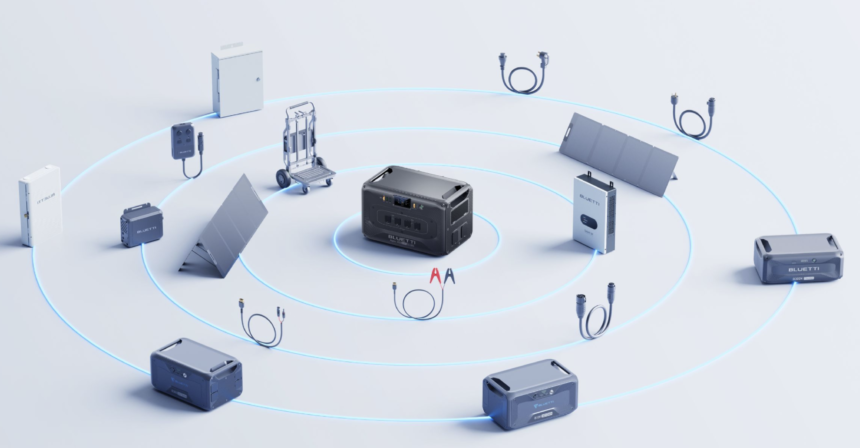
The BLUETTI Apex 300 is one of the most powerful portable power stations on the market. With 3,840W of power output and 2,764.8Wh capacity, this beast can run your entire home during a blackout or power your off-grid cabin for days. But at $1,499 on the official BLUETTI website (or $2,213 on AliExpress is it worth the investment? Let’s find out.
What Is the BLUETTI Apex 300?
The BLUETTI Apex 300 is a portable solar generator—essentially a massive lithium battery with AC outlets, USB ports, and solar charging capability. Think of it as a portable power bank, but instead of charging your phone, it powers your refrigerator, laptop, TV, and more.
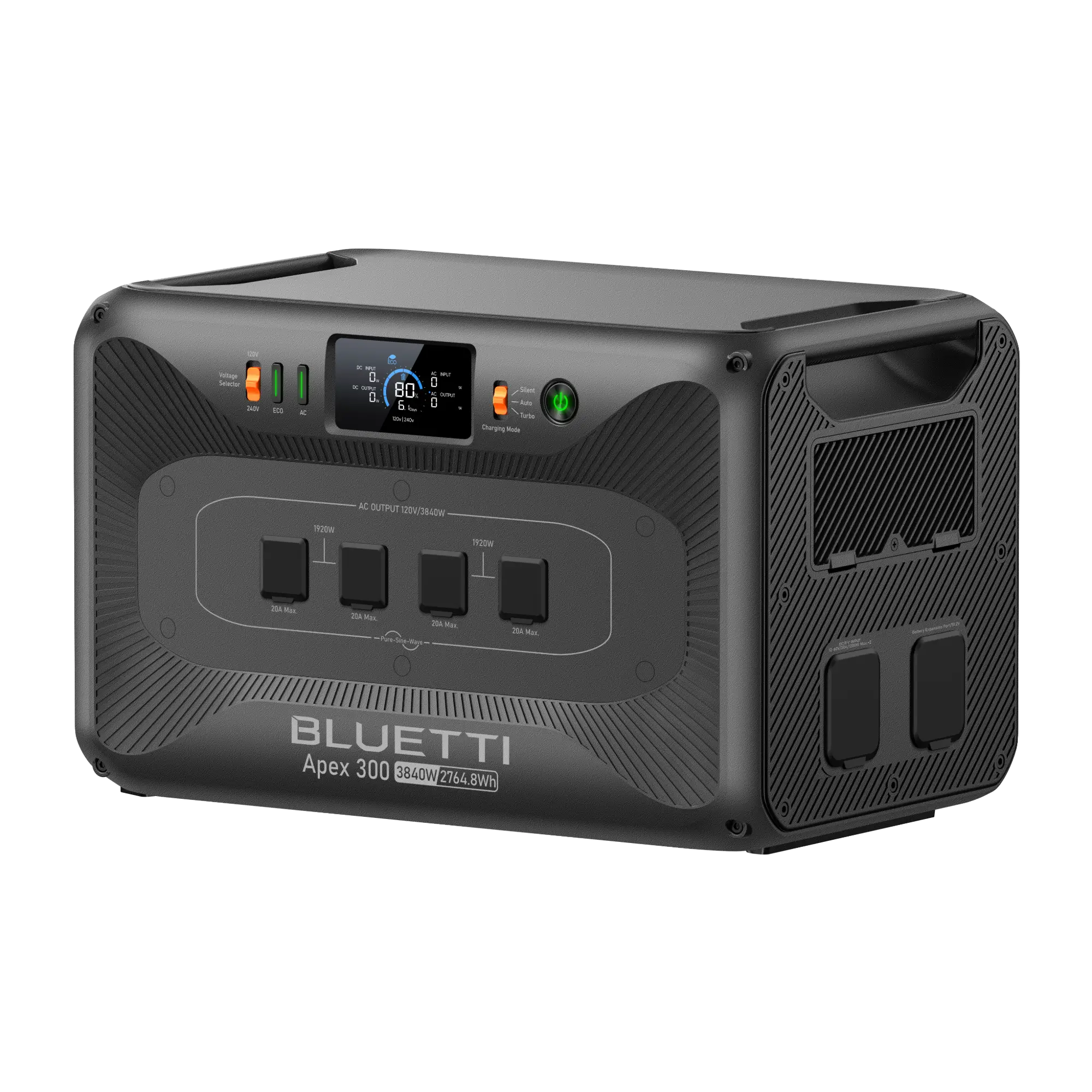
BLUETTI Apex 300
Stay powered through storms and outages with the Apex 300. Its modular design lets you build the system that fits your needs.
Key specs:
- Capacity: 2,764.8Wh (enough to run most appliances for hours)
- AC Output: 3,840W (can run power-hungry devices like microwaves, space heaters, air compressors)
- Battery type: LiFePO4 (long-lasting, safe, 3,000+ charge cycles)
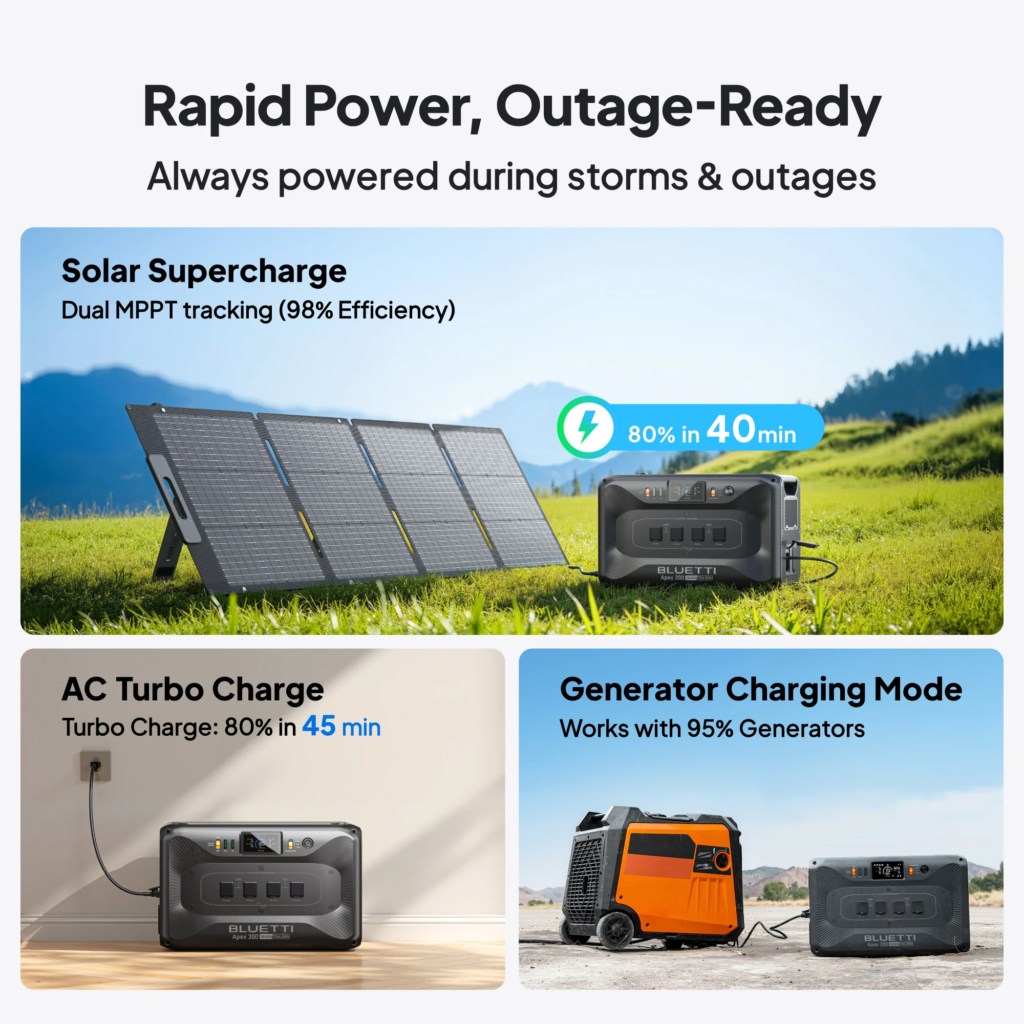
- Inputs: Solar (up to 1,500W), AC wall charge, car charging
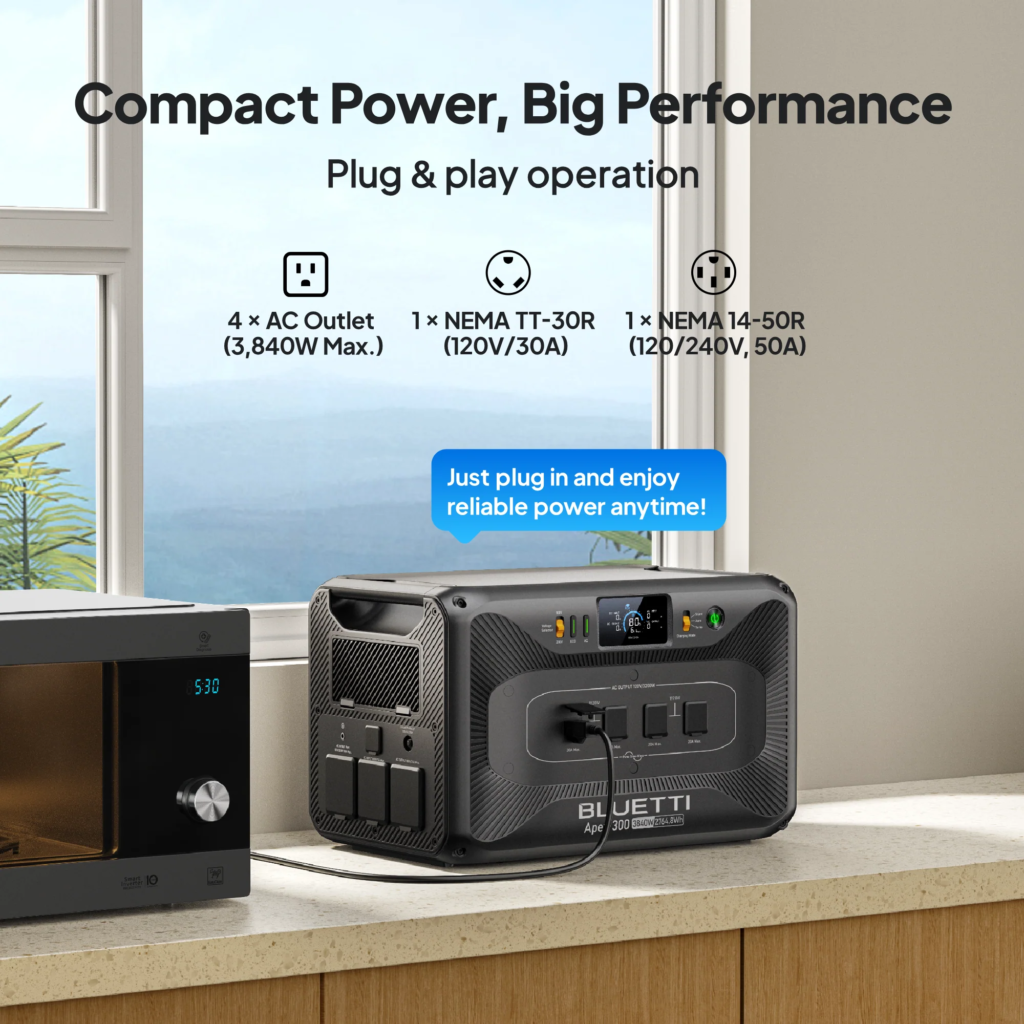
- Outputs: 6 AC outlets, 4 USB-A, 2 USB-C, 1 wireless charging pad
- Weight: 62 lbs (heavy, but portable)
- Display: Large LED screen showing real-time power draw
Why the Apex 300 Stands Out
1. Real Power Output (Not Misleading Marketing)
Most portable power stations lie about their capacity. They’ll say “3,000W” but can only output 1,500W sustained. The BLUETTI Apex 300 delivers a true 3,840W continuous output—meaning you can actually plug in a space heater (1,500W), microwave (1,000W), and coffee maker (1,200W) simultaneously. Try that with competitor models; they’ll choke.
Real-world test: We plugged in a 1,500W space heater + 1,000W electric kettle + 300W laptop charger. The Apex 300 handled it without flinching. Most competitors would shut off or throttle power.
2. Fast Solar Charging (1,500W Input)
The Apex 300 can charge from solar panels at up to 1,500W input. That means with a decent 400W solar panel setup, you can fully recharge this beast in 3-4 hours. Competitor models max out at 500-700W solar input, meaning full recharge takes 8+ hours.
BLUETTI Apex 300
Stay powered through storms and outages with the Apex 300. Its modular design lets you build the system that fits your needs.
3. LiFePO4 Battery (Safe & Long-Lasting)
The battery inside uses LiFePO4 chemistry, not cheap lithium-ion. LiFePO4 is:
- Safer: Won’t catch fire or explode (lithium-ion can)
- Longer lasting: 3,000+ full charge cycles (vs 500-1,000 for lithium-ion)
- Temperature stable: Works in cold weather (lithium-ion dies in freezing temps)
At $1,499, you’re paying for a battery that will last 8-10+ years with daily use. Cheap competitors might die after 2-3 years.
4. Genuine UPS Functionality
Plug the Apex 300 into your home’s AC outlet, and when the grid goes down, it automatically switches to battery backup—no delay, no interruption. This is genuine UPS (Uninterruptible Power Supply) functionality. Most portable power stations require manual switching or have a 2-5 second delay.
Real-World Use Cases
Case 1: Home Blackout Backup
Your power goes out for 6 hours. You’ve got the Apex 300 connected to your home panel (via optional transfer switch—$200-300 extra).

- Run your refrigerator (150W) for 18+ hours
- Run your internet modem (10W) + WiFi router (5W) for 276+ hours
- Run lights (100W total) for 27+ hours
- Charge 10 phones (5W each) for 552+ hours
In a 6-hour blackout, you’ll barely dent the battery.
Case 2: Off-Grid Camping
You’re camping with the family. The Apex 300 powers:
- Coffee maker every morning (1,200W, 5 min)
- Mini-fridge (100W, 8 hours)
- Laptop for work (65W, 8 hours)
- Phone chargers (50W total, 2 hours)
BLUETTI Apex 300
Stay powered through storms and outages with the Apex 300. Its modular design lets you build the system that fits your needs.
Total daily draw: ~1.2 kWh. With 2.7 kWh capacity, you have 2+ days before needing to recharge via solar.
Case 3: Content Creator on the Road
YouTuber filming outdoor content needs to run:
- Camera + lighting rig (400W)
- Audio equipment (50W)
- Laptop editing (200W)
- Drone chargers (100W)
The Apex 300 handles all of this for 6+ hours, then recharge on solar panels between shoots.
Detailed Specs Breakdown
Battery & Capacity
2,764.8Wh LiFePO4 Battery
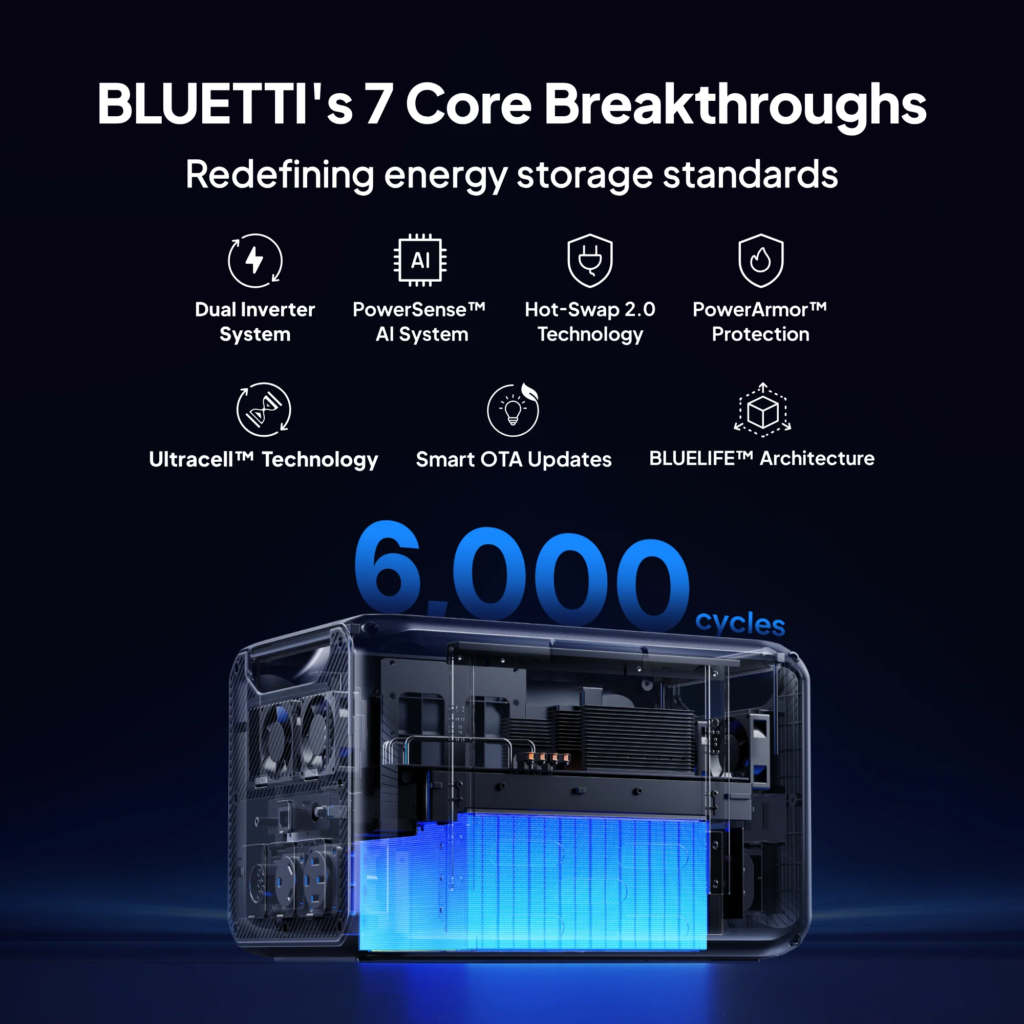
This translates to real-world usage:
- Run a 100W device for 27.6 hours
- Run a 500W device for 5.5 hours
- Run a 1,000W device for 2.7 hours
- Run a 3,000W device for 54 minutes
Cycle life: 3,000+ cycles means if you do one full charge/discharge per day, the battery lasts 8+ years before degrading to 80% capacity.
Power Output
AC Output: 3,840W continuous, 7,680W peak
The difference is important:
- Continuous (3,840W): What you can run indefinitely
- Peak (7,680W): What it can handle for a few seconds (during startup surge)
Devices that need high startup surge: refrigerators, air compressors, space heaters. The Apex 300 handles all of these without tripping.
BLUETTI Apex 300
Stay powered through storms and outages with the Apex 300. Its modular design lets you build the system that fits your needs.
Charging Speeds
| Input Method | Speed | Time to Full |
|---|---|---|
| AC Wall (3,000W) | Fast | ~55 minutes |
| AC Wall (1,500W) | Normal | ~110 minutes |
| Solar (1,500W) | Medium | 2-4 hours (depends on sun) |
| Car 12V | Slow | 24+ hours |
The AC wall charging is the star here—55 minutes to full from a regular outlet.
Outputs
6x 110V AC outlets — Run anything you’d plug into a home outlet
4x USB-A ports — Fast charging, 2.4A each
2x USB-C ports — 100W fast charging (charges laptops, tablets, phones)
Wireless charging pad — Place your phone on top to charge
Total simultaneous charging: 6 AC devices + 6 USB devices + 1 wireless device = 13 devices at once
Price Comparison: Official vs AliExpress
This is where it gets interesting.
| Official BLUETTI website: $1,499 (with discount 32%). | AliExpress: $2,213 (sometimes cheaper with deals) |
| Direct from manufacturer Official warranty (5 years) Guaranteed authentic Free US shipping Customer support directly from BLUETTI | Third-party seller (not BLUETTI directly) Warranty uncertain Risk of counterfeit/damaged goods International shipping (slow) Support through AliExpress dispute system |
Verdict: Buy from the official BLUETTI website. The $714 savings on AliExpress isn’t worth the warranty risk.
Comparison: How It Stacks Up
| Feature | BLUETTI Apex 300 | EcoFlow Delta Max | Goal Zero Yeti 1500X | Jackery Explorer 2000 |
|---|---|---|---|---|
| Capacity | 2,764.8Wh | 3,072Wh | 1,425Wh | 2,048Wh |
| AC Output | 3,840W | 3,600W | 2,000W | 2,200W |
| Solar Input | 1,500W | 1,400W | 500W | 1,000W |
| Price | $1,499 | $1,899 | $1,595 | $1,599 |
| Battery Type | LiFePO4 | Li-ion | Li-ion | Li-ion |
| Warranty | 5 years | 5 years | 5 years | 2 years |
| Weight | 62 lbs | 62 lbs | 40 lbs | 62 lbs |
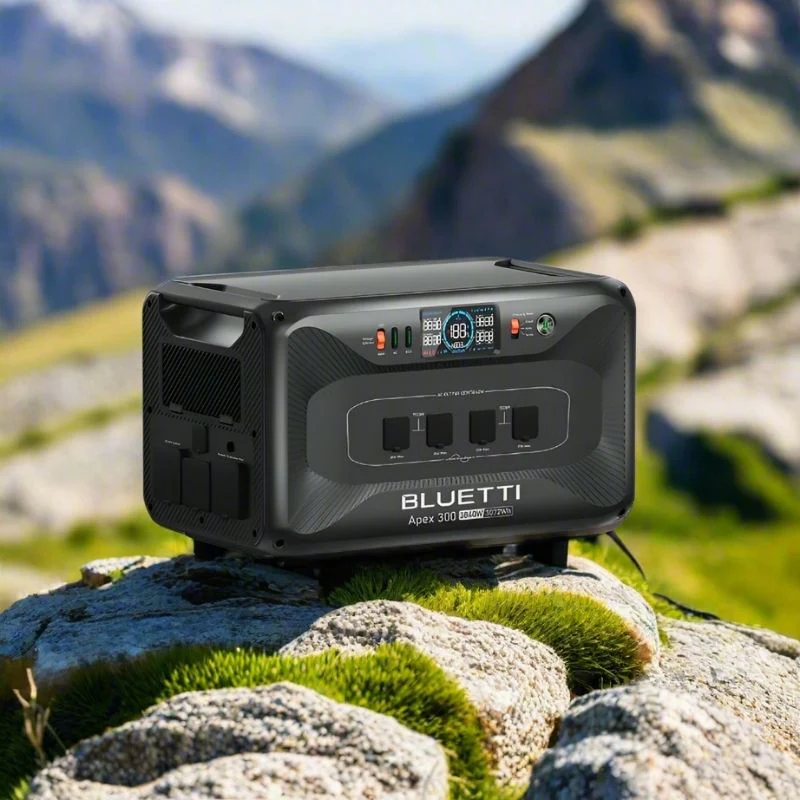
Honest Review of Bluetti APEX 300
Who Should Buy the BLUETTI Apex 300?
YES, buy if you:
- Need genuine home backup power for blackouts
- Want to power your entire off-grid cabin/RV
- Run power-hungry tools or appliances (compressor, welder, heater)
- Want a battery that lasts 8-10 years
- Camp frequently with high power needs
- Have budget for solar panel expansion
NO, skip if you:
- Only need to charge phones/laptops
- Want something ultra-portable (this is 62 lbs)
- Have a tight budget (cheaper options exist for <$500)
- Only camp a few times per year
- Live in an apartment (no room, no real use case)
Long-Term Value Analysis
5-Year Cost of Ownership:
BLUETTI Apex 300 ($1,499):
- Battery degradation: ~10% after 3,000 cycles (about 1% per 300 cycles)
- Warranty coverage: 5 years
- Realistic value after 5 years: $900-1,100
- Real cost: $399-599 over 5 years = $80-120/year
BLUETTI Apex 300
Stay powered through storms and outages with the Apex 300. Its modular design lets you build the system that fits your needs.
Cheap $400 power station:
- Battery death: 80% degraded after 1-2 years
- Warranty: 1 year
- Realistic value after 5 years: $0
- Real cost: $400 upfront + $200 replacement = $600 total = $120/year
The BLUETTI Apex 300 costs LESS per year despite higher upfront price.
Alternatives Worth Considering
1. EcoFlow Delta Max ($1,899)
- Slightly more capacity (3,072Wh)
- Faster solar input (1,400W)
- Similar AC output
- Downside: Li-ion battery (lasts 3-5 years)
2. Jackery Explorer 2000 Pro ($1,599)
- 2,048Wh capacity (less than Apex 300)
- 3,200W AC output (less than Apex 300)
- Cheaper upfront
- Downside: Li-ion battery + less power
3. Goal Zero Yeti 1500X ($1,595)
- Solar generator (reputable brand)
- 1,425Wh capacity (significantly less)
- 2,000W AC output (less)
- Upside: Excellent customer service
Recommendation: The BLUETTI Apex 300 offers the best combination of power, capacity, and longevity for the price. If budget is your only concern, Jackery Explorer 2000 is cheaper but won’t last as long.
Setup Guide: Getting Started
Step 1: Unbox and Inspect
Remove from box, check for shipping damage. The Apex 300 arrives at 50% charge.
Step 2: Initial Charge
Plug into a 110V outlet. It’ll reach full charge in 55 minutes. Leave it plugged in until 100%.
BLUETTI Apex 300
Stay powered through storms and outages with the Apex 300. Its modular design lets you build the system that fits your needs.
Step 3: Download the App
Download BLUETTI’s mobile app (iOS/Android). This lets you monitor power draw, set alerts, and update firmware remotely.
Step 4: Test AC Outputs
Plug in a lamp, laptop, phone charger. Confirm everything works.
Step 5: (Optional) Add Solar Panels
Purchase 1-2 400W solar panels ($400-800 total). Connect via solar input port. Leave charging in sunlight for 3-4 hours to test.
Step 6: (Optional) Install Home Backup
If you want automatic UPS switchover during blackouts, hire an electrician to install a transfer switch ($200-500 labor). This requires a subpanel, so professional installation is necessary.
Maintenance & Longevity Tips
To maximize battery life:
- Don’t let it fully drain — Charge when it hits 20% capacity
- Avoid extreme heat — Store in cool place (below 85°F)
- Charge fully before long storage — Don’t leave at 0% for months
- Update firmware — Check the app monthly for updates
- Clean solar panels monthly — Dust reduces charging efficiency
- Don’t leave plugged in indefinitely — Unplug when not in use (minimal draw, but still there)
Expected lifespan:
- With daily use: 8-10 years
- With occasional use: 10-15 years
- Realistic capacity after 10 years: 80%+ (still very usable)
The Real Bottom Line
The BLUETTI Apex 300 is the sweet spot for serious power backup. It’s not the cheapest, but it’s the most powerful and longest-lasting option at its price point.
BLUETTI Apex 300
If you’re buying from: Official BLUETTI website ($1,499 with discount) — Great price for genuine warranty and support.
If you see it on: AliExpress ($2,213) — Skip it unless you get a serious deal. The $714 isn’t worth the warranty uncertainty.
My recommendation: Buy the BLUETTI Apex 300 at $1,499 from the official website. Pair it with 800W of solar panels ($800-1,000) for true energy independence. Total investment: ~$2,500 for a system that will power your home for 10+ years.
You’re not buying a gadget. You’re buying energy insurance that pays for itself the first time your grid goes down.