



For millions of runners and cyclists, Strava is the default social network for sharing activities. However, for the serious athlete—whether a data-obsessed road cyclist or a trail runner focused on vertical gain—the platform’s true power lies in its subscription-based tracking and analysis tools.
As of early 2026, Strava has significantly overhauled its premium offering, moving beyond simple leaderboards to include generative AI coaching and professional-grade mapping derived from its FATMAP integration. This guide breaks down the most advanced tracking features currently available to subscribers.
Athlete Intelligence: AI-Powered Insights
One of the most significant updates in the last year is the maturation of Athlete Intelligence. Moving out of beta in 2025, this feature uses generative AI to analyze your activity data immediately after upload.
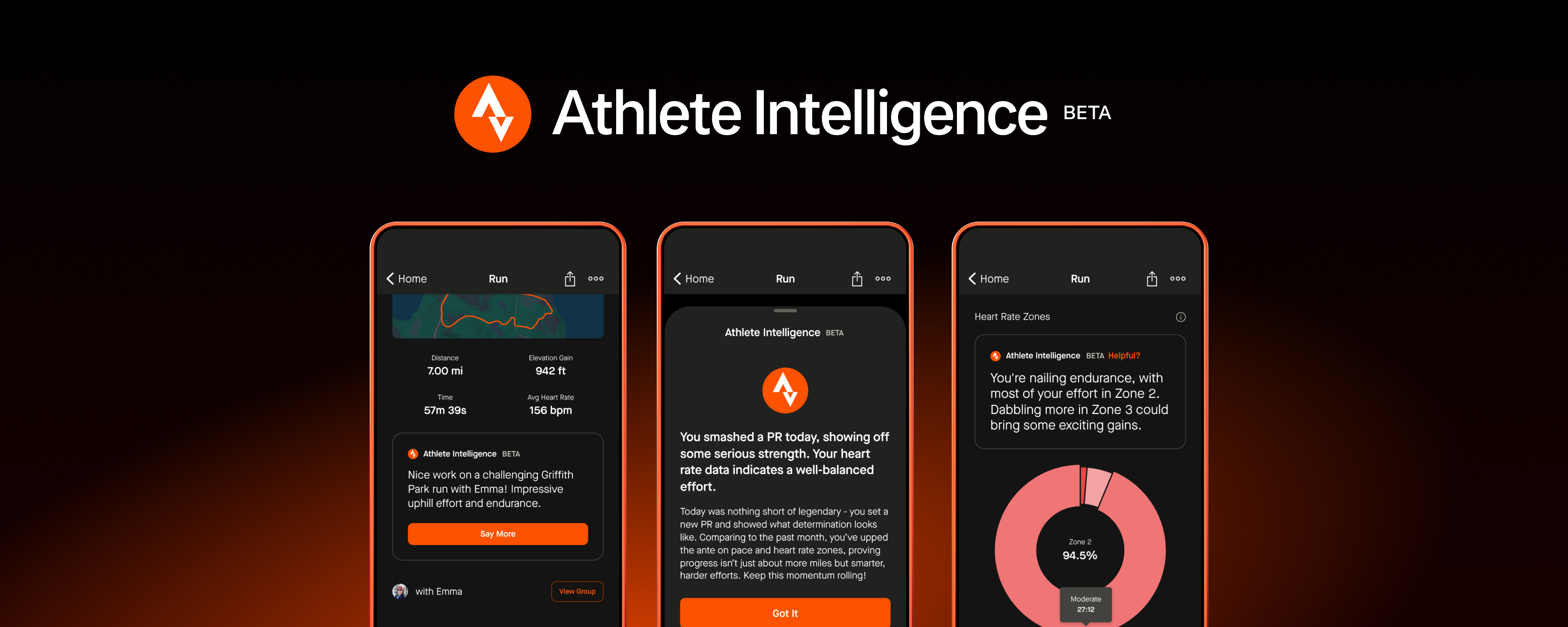
- Beyond Numbers: Instead of just displaying raw stats like “Average Heart Rate: 155 bpm,” the AI provides a contextual summary. It might tell you, “You spent 20% more time in Zone 4 than your last similar workout, indicating a higher intensity focus.”
- Trend Analysis: The AI reviews your last 30 days of training to identify patterns. It can flag if you are ramping up volume too quickly or if your relative effort is consistently dropping despite similar paces—a key indicator of improved fitness.
- Personalized Tips: It offers specific training advice based on your recent performance, such as suggesting a rest day or a specific type of interval session to target a weakness.
Next-Generation Mapping and Routing
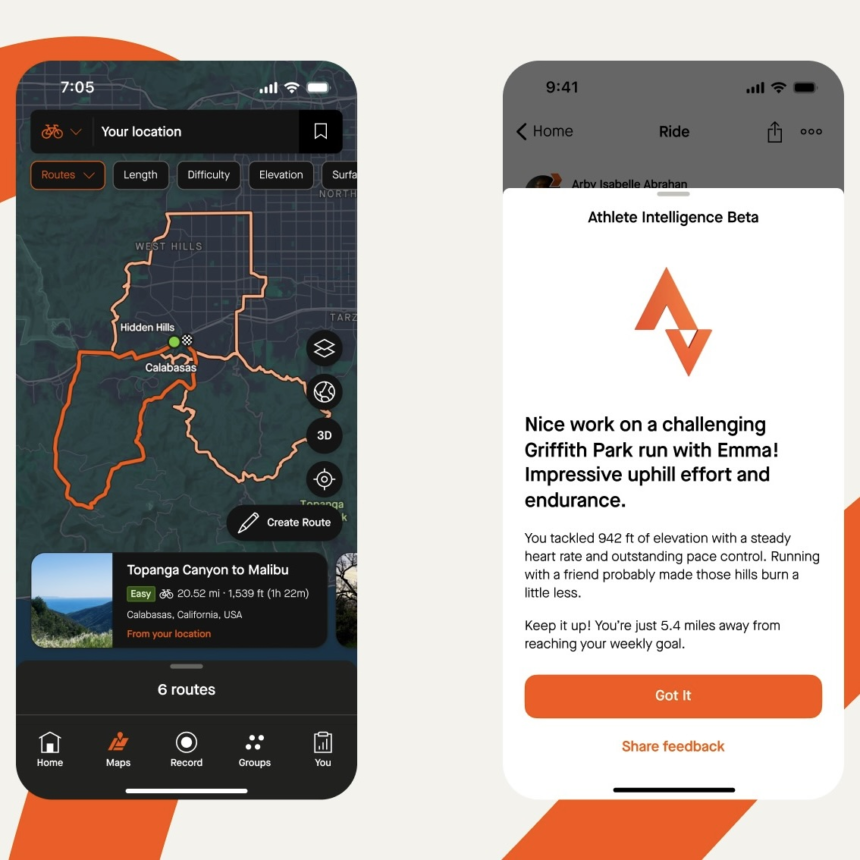
Strava’s mapping capabilities received a massive upgrade with the integration of its proprietary Map Rendering Engine (MRE), heavily influencing how athletes plan and track off-road adventures.

- 3D Immersive Topography: The standard flat map has been replaced with lifelike 3D terrain. This is critical for mountain athletes who need to visualize the steepness of a climb or the exposure of a ridge line before they head out. It includes data on avalanche gradients and winter map layers.
- Night Heatmaps: Launched to address safety concerns for athletes training before dawn or after dusk, this map layer highlights routes that are popular specifically between sunset and sunrise. This helps users identify well-lit or frequently traveled streets for safer night running.
- Weekly Heatmaps: Unlike the global heatmap which aggregates years of data, the “Weekly” view shows only activity from the last 7 days. This is an advanced tool for checking current trail conditions—if a usually popular trail shows zero heat for the last week, it might be washed out, closed, or buried in snow.
Advanced Performance Metrics
For athletes focused on physiological adaptation, three core metrics form the “holy trinity” of Strava’s training analysis.
Fitness & Freshness
This chart is Strava’s answer to the “Performance Management Chart” (PMC) found in professional coaching software. It tracks three simultaneous trend lines:
- Fitness (CTL): A long-term average of your daily training load.
- Fatigue (ATL): A short-term average of your recent stress.
- Form (TSB): The difference between fitness and fatigue.
Usage: Athletes use this to “peak” for a race. The goal is to taper your training so that Fatigue drops faster than Fitness, resulting in a high Form score on race day.
Relative Effort
While power meters are the gold standard for cyclists, Relative Effort allows runners and multi-sport athletes to track intensity using only Heart Rate data. It weighs the time spent in higher heart rate zones exponentially heavily. A short, max-effort interval session might generate the same Relative Effort score as a long, slow 3-hour run, helping you compare the physiological “cost” of different workout types.
Zone Analysis
Subscribers get access to detailed histograms showing exactly how many minutes were spent in specific Power or Heart Rate zones. This is essential for verifying if a “Zone 2 base ride” actually stayed in Zone 2, or if you drifted into “junk miles” territory.
Live Segments
Live Segments transforms a solo training ride into a real-time race. When you approach a starred segment (a specific stretch of road or trail), your bike computer or phone switches to a “Live” mode.
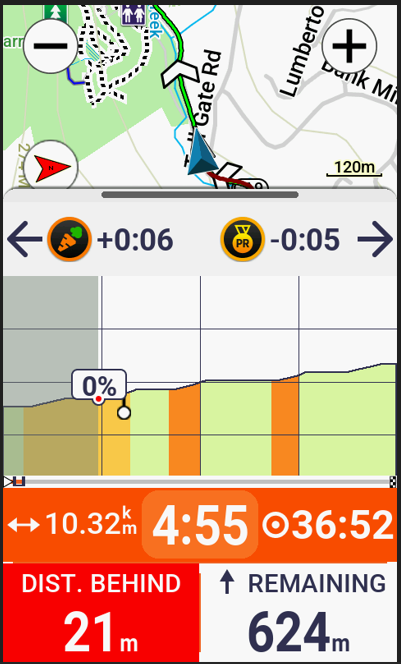
- Real-Time Comparison: You see a ghost racer representing your Personal Record (PR) or the King/Queen of the Mountain (KOM/QOM).
- Feedback: The display shows exactly how many seconds you are ahead or behind, allowing you to pace your effort perfectly to break a record.
- Device Integration: This feature is most powerful when paired with units like Garmin, Wahoo, or Hammerhead, which display these metrics directly on your handlebars without needing to look at your phone.
Safety and Privacy: Beacon
While often overlooked as a “tracking” feature, Beacon is critical for solo athletes. It allows you to share your real-time location with up to three safety contacts.
- How it works: When you start a recording, your contacts receive a text with a URL to view your live progress on a map.
- Battery Status: Crucially, it also shares your phone’s battery level, so if your dot stops moving and your battery was at 1%, your contact knows you likely just died digitally rather than physically.
Summary Table: Free vs. Subscription Tracking
| Feature | Free Version | Subscription (Advanced) |
|---|---|---|
| Analysis | Basic time, distance, pace | Heart Rate & Power Zones, Relative Effort, Fitness/Freshness trends |
| Maps | Standard 2D maps | 3D Terrain, Night/Weekly Heatmaps, Route Builder |
| Segments | Top 10 lists, basic matching | Live Segments, Full Leaderboards (Age/Weight filters) |
| Safety | Beacon (App only) | Beacon (Garmin/Wahoo integration) |
| Coaching | None | Athlete Intelligence (AI) insights & tips |
For the casual jogger, the free version of Strava remains sufficient. However, for athletes who need to plan routes based on recent ground conditions, track their physiological peak for a race, or safely navigate technical terrain, the advanced tracking features offer a professional-grade toolkit.